
Outdoor furniture powder coating can give faded, rusty, or chipped metal pieces a fresh finish without forcing you to replace a set you enjoy. Sun, rain, moisture, and daily use can break down paint. The right refinishing process removes the worn surface, improves the appearance, and adds durable protection.
This guide explains the complete process, which pieces may be good candidates, why preparation matters, and how to care for the new finish. Check out our powder coating services to explore available finish options, and check out our blog for more helpful information. Powder Tech Solutions provides this service in Gibsonville, NC.
Why Restore Metal Furniture Instead of Replacing It?
Metal patio furniture can remain useful long after its finish starts to fail. A strong frame may only need surface work. Restoration lets you keep a comfortable set or preserve a style that suits your space.
Refinishing may also make sense when a set has sentimental value or solid construction. You can update usable pieces with a color and texture that fit your outdoor space.
Common reasons to consider refinishing include:
- Faded or uneven color
- Peeling, flaking, or chipped paint
- Scratches and signs of regular use
- An outdated color that no longer suits the space
- A matching set that would be difficult to replace
Restoration cannot correct every problem. Severe corrosion, weak joints, or broken frames may make refinishing unsafe or impractical. A professional inspection can confirm the condition.
Before choosing a replacement, look beyond the worn color. Check whether the frame sits level, supports weight, and remains safe to use. Loose hardware may be replaceable, while deep corrosion or failed welds may require repair before refinishing. This review helps separate surface wear from structural damage and keeps the decision focused on safety as well as appearance.
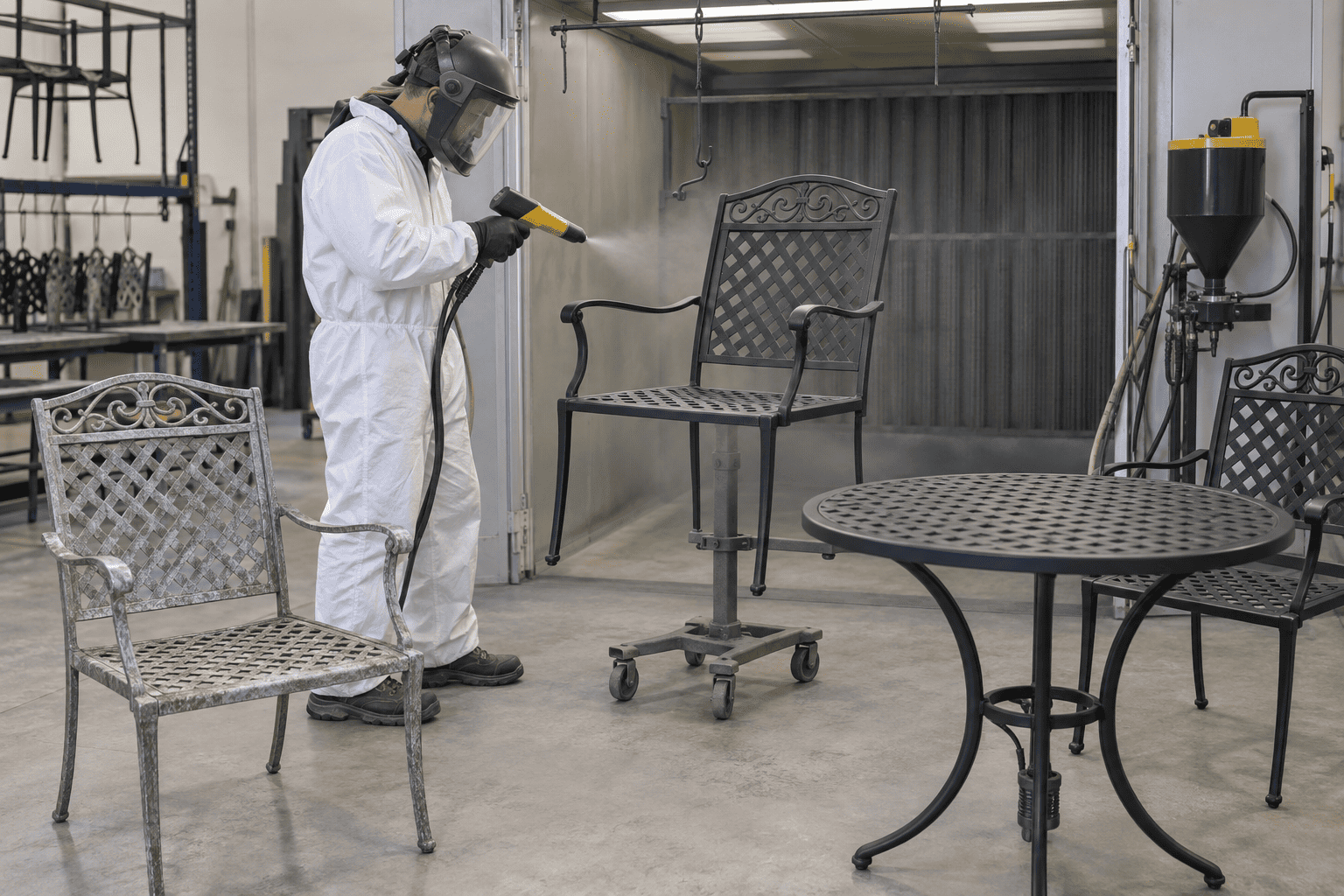
What Furniture Can Be Powder Coated?
Powder coating works on suitable metal items that can handle curing heat. Steel and aluminum furniture are common candidates, but you must review the material, construction, and condition.
Items often considered for outdoor furniture powder coating include:
- Patio chairs and dining chairs
- Metal tables and table bases
- Benches and gliders
- Lounge chair frames
- Garden furniture and decorative metal pieces
- Commercial seating and tables
Plastic, fabric, cushions, wood, rubber feet, and other materials may need to be removed. Some items may also need to be taken apart for more even preparation and coverage.
How Outdoor Furniture Powder Coating Works
Proper preparation helps the powder coat bond to metal and provides consistent coverage. Although needs vary, most projects follow main stages.
1. Furniture Inspection and Project Review
The process starts with a review of the metal, existing finish, and visible damage. The team checks for corrosion, cracks, and loose joints.
Customers can also discuss color, texture, and gloss level. The furniture’s use and placement can guide the selection.
2. Disassembly and Surface Cleaning
Remove removable materials and hardware as needed. Heat-sensitive pieces cannot enter the curing oven. Oils, dirt, and residue must also be cleaned away.
Disassembly improves access to corners, joints, and frame sections while protecting uncoated components.
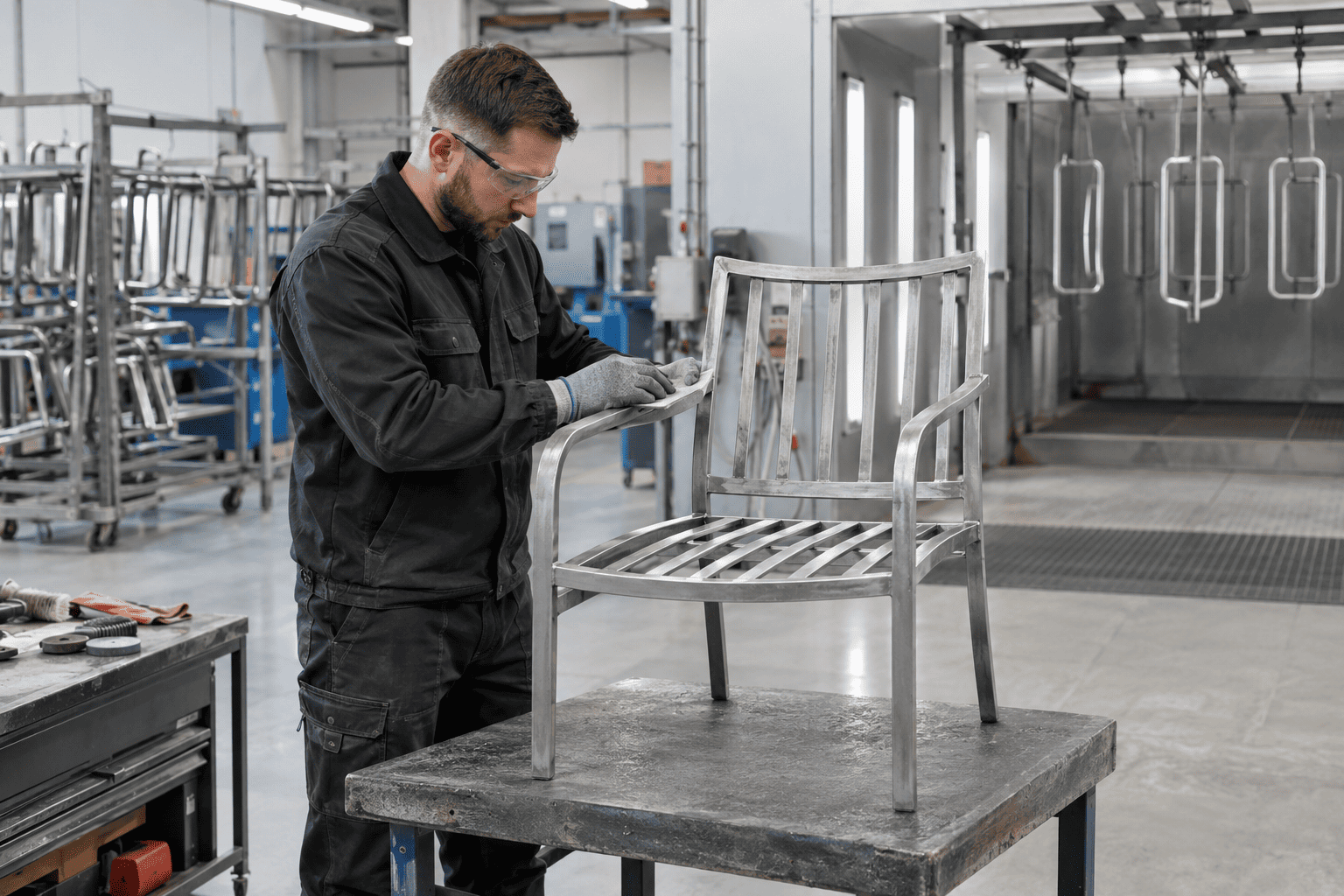
3. Sandblasting and Old Finish Removal
Sandblasting services remove rust, paint, old coatings, and buildup. This creates a cleaner base for the new finish.
Weak material left beneath a coating can affect adhesion and appearance. Thorough preparation is vital to metal furniture refinishing.
The furniture’s shape affects preparation. Decorative curves, mesh panels, narrow joints, and backs can hold old paint or rust in hard-to-reach areas. Proper cleaning and blasting help expose these spots before coating begins. Preparation around every edge supports a more consistent finish.
4. Powder Application
After preparation, specialized equipment applies dry powder to the metal. An electrostatic charge helps it cling to the grounded surface. The technician covers the frame, detailed areas, and corners.
Consistent application helps prevent thin areas and uneven results.
5. Heat Curing and Final Inspection
The piece enters an oven at a controlled temperature. Heat melts the powder into a continuous finish bonded to the metal. Curing conditions depend on the item and coating.
After cooling, the team checks the furniture for coverage, consistency, and appearance. Removed components are reinstalled when appropriate.
Benefits of Powder Coating Outdoor Furniture
Powder coating forms a strong layer over prepared metal and offers several benefits.
Durable Protection for Regular Use
Outdoor furniture faces moisture, sunlight, movement, and impacts. Powder coating helps metal resist scratches, chips, corrosion, fading, and normal wear. No finish is damage-proof, but proper coating provides reliable protection.
Many Colors and Finish Options
Furniture restoration does not mean recreating the original look. Choose a shade or texture that suits your outdoor area. Neutral colors feel simple, while brighter colors stand out.
Available options may include:
- Smooth gloss or semi-gloss finishes
- Matte and low-sheen surfaces
- Textured finishes
- Classic neutral colors
- Bold or decorative colors
Choices depend on powder availability and the item. Physical samples offer a clearer view of the final look.
A Clean and Even Appearance
Spray paint can leave runs, brush marks, or uneven areas. Professionally applied powder creates consistent coverage across properly prepared surfaces. This is especially helpful for frames, legs, arms, and detailed metalwork that must look uniform from several angles.
How to Care for the New Finish
Basic care can help the coating stay clean and attractive. Wash furniture with mild soap, water, and a soft cloth or sponge. Rinse away residue and dry the surface, especially around joints or places where water can collect.
Avoid wire brushes, abrasive pads, and harsh cleaners that could scratch or dull the finish. Do not drag chairs or tables across rough surfaces. Lift pieces when moving them and use suitable pads under furniture legs when needed.
It also helps to:
- Clean pollen, dirt, spills, and bird droppings promptly
- Check the surface for chips or damage from impacts
- Keep furniture covered or sheltered during harsh weather
- Store removable cushions separately when they are not in use
- Follow any care instructions provided for the selected finish
Outdoor Furniture Powder Coating FAQs
Is powder coating better than painting metal furniture?
Powder coating often provides a thicker, more even, and more durable finish than standard liquid paint. The better option still depends on the item, metal type, condition, desired look, and budget.
Can rusty outdoor furniture be powder coated?
Furniture with surface rust may be a good candidate after the rust and old finish are removed. Heavy corrosion, weakened metal, or structural damage may make restoration impractical. The piece should be inspected first.
How long does outdoor furniture powder coating last?
There is no single lifespan for every project. Results depend on surface preparation, coating type, weather exposure, use, impacts, and ongoing care. Regular cleaning and protection from harsh conditions can help the finish last longer.
Do I need to remove cushions or fabric first?
Yes, cushions, slings, fabric, plastic parts, and other heat-sensitive materials generally need to be removed before curing. Ask your coating provider which parts you should remove and which they can handle during the project.
Give Your Metal Furniture a Fresh Start
Outdoor furniture powder coating can restore the appearance of suitable metal chairs, tables, benches, and frames while adding protection against weather and daily wear. Careful inspection, cleaning, sandblasting, powder application, and heat curing contribute to a clean, durable result for many seasons to come. Contact us to discuss your outdoor furniture and request a free quote.
Don’t replace a sturdy set just because its finish looks worn. Powder Tech Solutions can provide a fresh finish for continued use.
